SOS drone v3
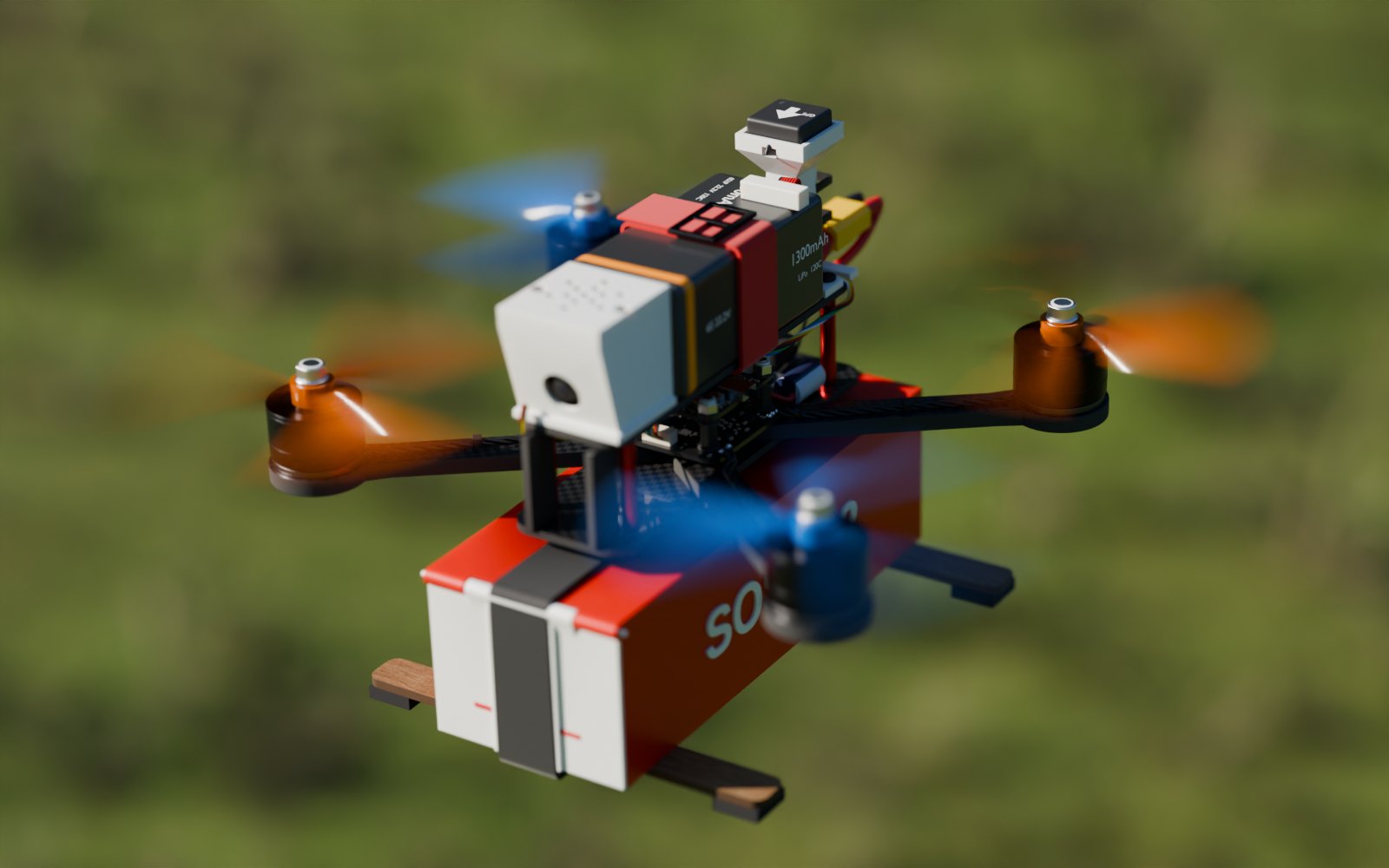
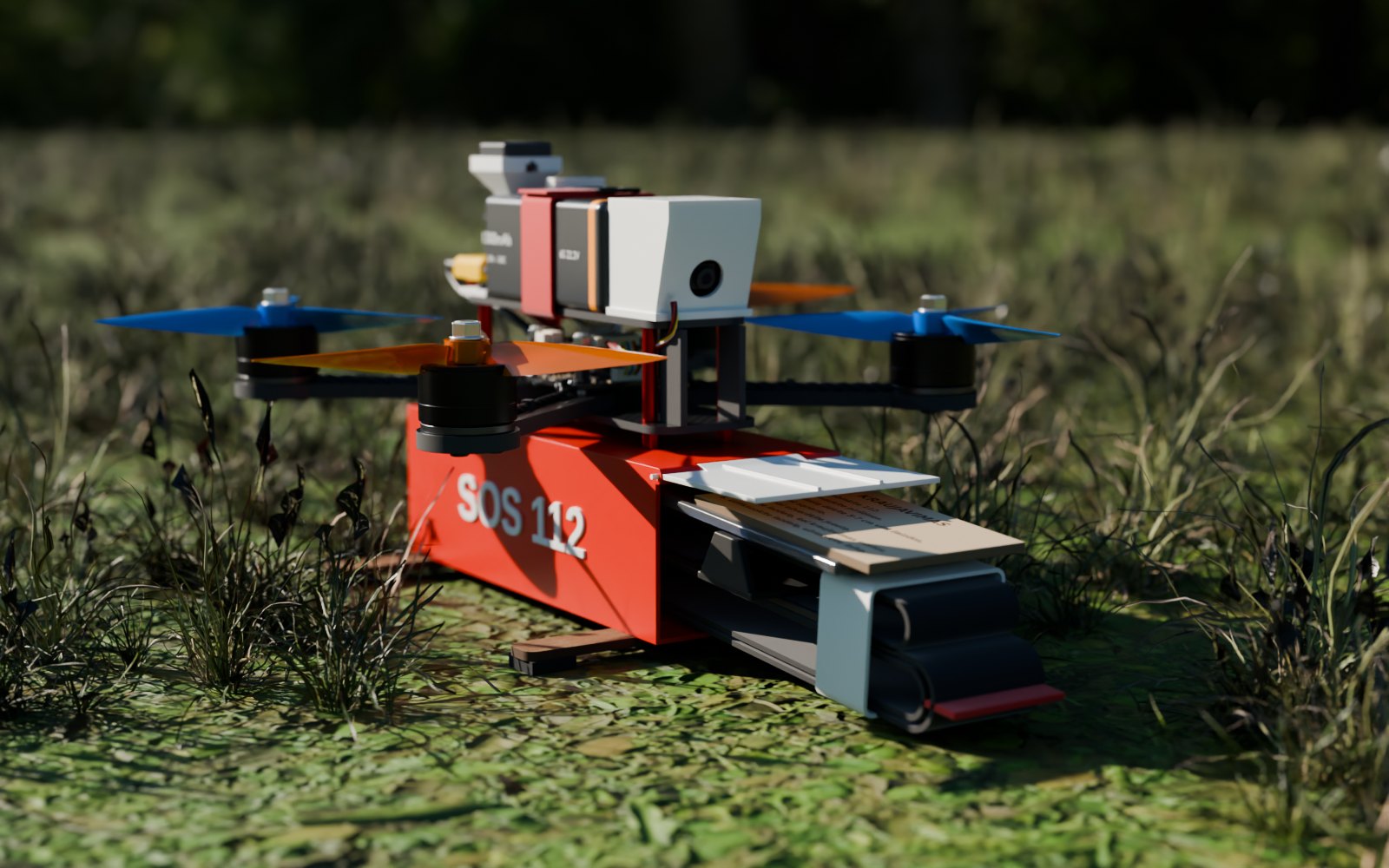
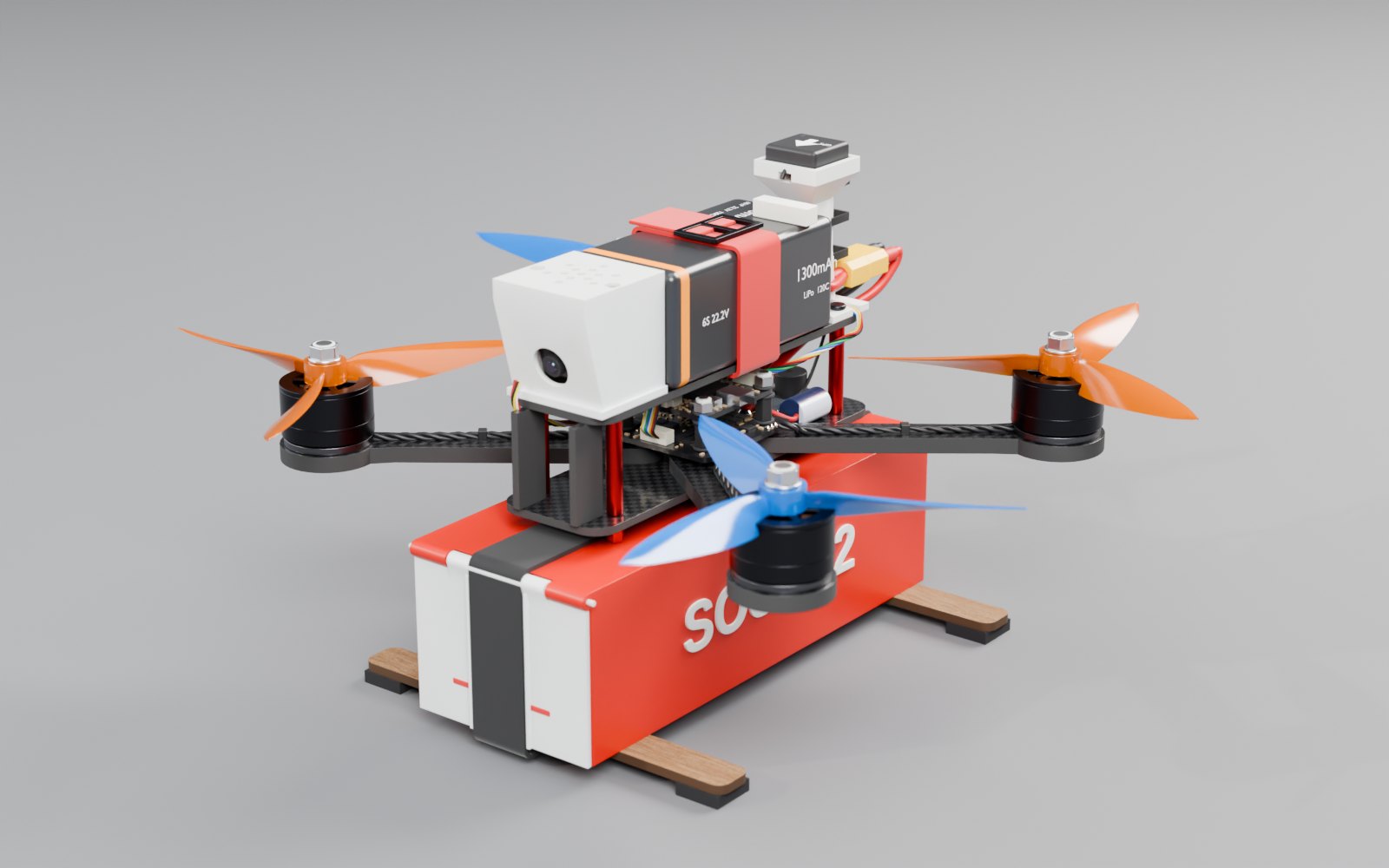
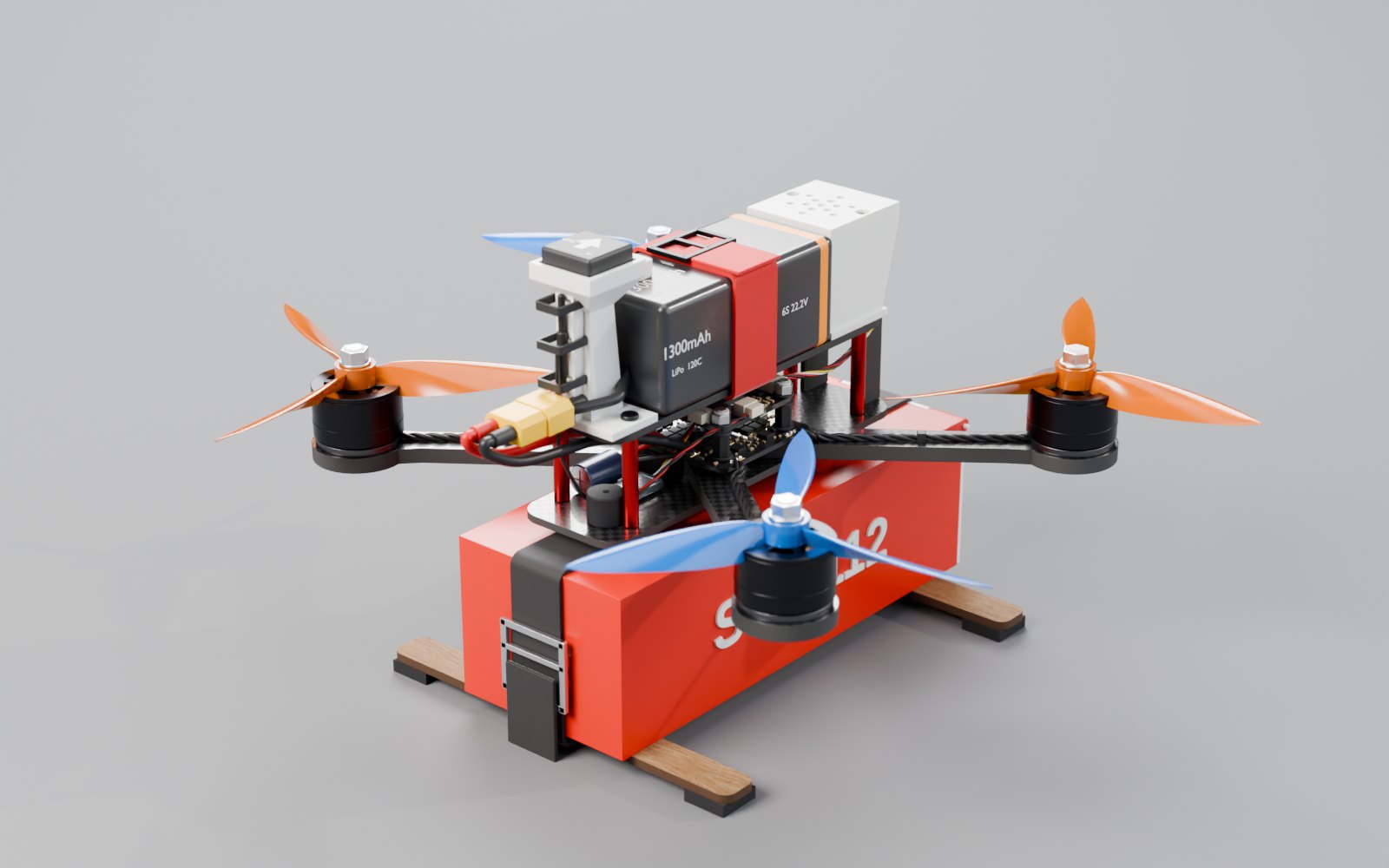
A 5-inch GPS quad that carries a tourniquet kit up to 200 m on its own, shows the scene live so a 112 dispatcher can see it, lands 5 m from the casualty facing them and plays spoken instructions.
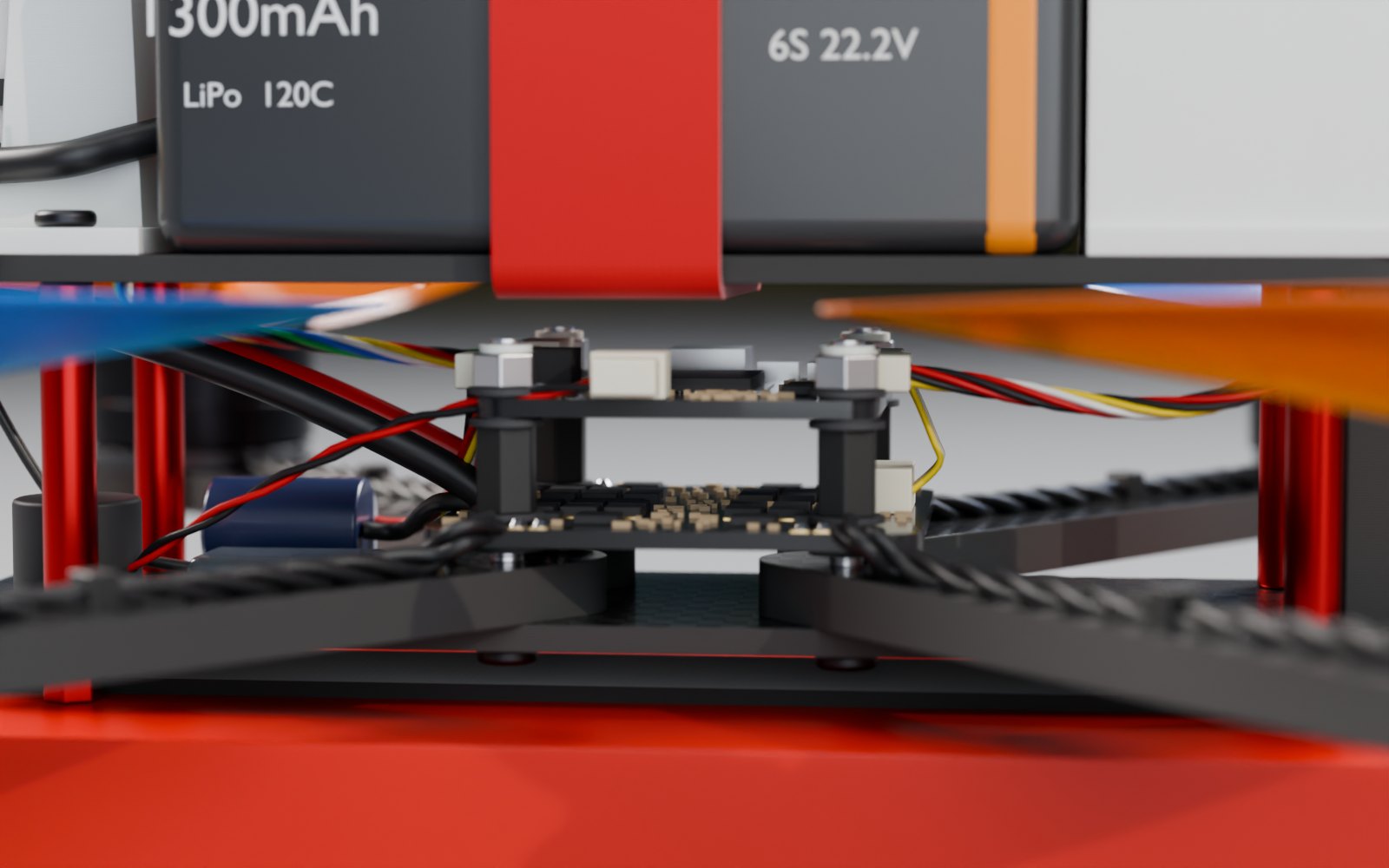
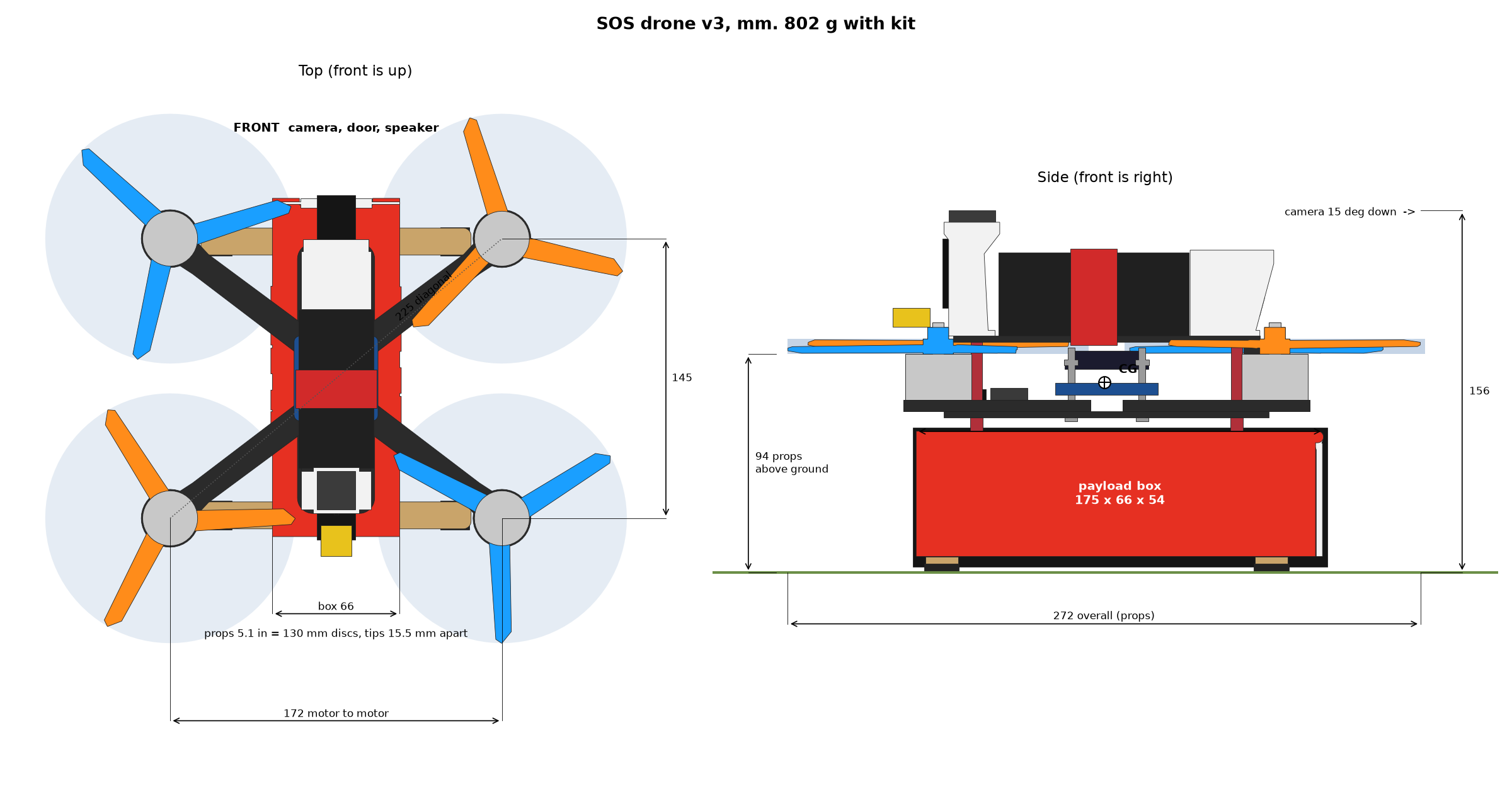
Shopping list
Prices checked live on 7 October 2026. Rotorama ships to Lithuania in 2-3 days. AliExpress prices are the cheapest listed variant, so pick the right one when ordering.
| Part | Qty | € | Shop |
|---|---|---|---|
| Readytosky Mark4 5" frame | 1 | 20.69 | Rotorama |
| iFlight XING-E Pro 2207 1800KV | 4 | 62.36 | Rotorama |
| MicoAir H743 V2 + 55A AM32 stack, runs ArduPilot out of the box | 1 | 92.79 | Rotorama |
| MicoAir MG-903 GPS + compass | 1 | 16.39 | Rotorama |
| SkyGuy Nano 2.4G ELRS receiver | 1 | 13.49 | Rotorama |
| CNHL Ministar 1300 mAh 6S | 1 | 21.79 | Rotorama |
| Gemfan Hurricane 51477-3 props, sets of 4 | 2 | 6.18 | Rotorama |
| FC buzzer, battery strap 20x250, box strap 20x550 | 3 | 9.27 | Rotorama |
| M3 screws x8, x12, x30, M3 square nuts, foam pads, heat shrink | 6 | 6.74 | Rotorama |
| Shipping to Lithuania (Packeta) | 7.00 | Rotorama | |
| Seeed XIAO ESP32S3 Sense, camera + WiFi + computer | 1 | 15.49 | AliExpress |
| DFPlayer Mini, 28 mm 1 W speaker, microSD, 1 kΩ resistor | 4 | 7.09 | AliExpress |
| M3 male-female hex standoffs 6+6, shipping buffer | 4.17 | AliExpress | |
| PETG (≈125 g), 3 mm plywood offcut, foam tape, zip ties | 5.40 | materials | |
| Drone total | 288.85 | €11.15 left |
The video is WiFi rather than analog because the analog chain came to about €315 once a USB 5.8 GHz receiver was included. The XIAO streams to a laptop, draws a dashboard with the GPS position for 112, bridges MAVLink for Mission Planner and drives the voice player, all for €15.49.
Print and cut
3D print · Bambu Lab X1 Carbon
Open plate_x1c.3mf in Bambu Studio: all four parts on one plate, already standing right. Bambu PETG HF, 0.20 mm Standard, 4 wall loops, 20% infill, supports off, brim on the box and door. The mast and pod can go in PETG-CF for stiffness. With the AMS, paint the “SOS 112” letters white.
| Part | Grams | On the bed | Note |
|---|---|---|---|
| Payload box | 91 | closed back wall down | 175 mm tall, brim. Raised “SOS 112” on both sides |
| Box door | 7 | on its bottom edge | hinge pin: 70 mm of 1.75 mm filament |
| Head pod | 15 | as flown | holds camera, voice player, speaker, WiFi antenna |
| GPS mast | 12 | upright | ELRS antenna clips on its back |
Laser · red cut, blue score, black engrave
| Part | Material | Qty |
|---|---|---|
| Skid bars 140 × 14 mm, widen the stance to 40° | 3 mm birch ply | 2 |
| Instruction card 85 × 54 mm, Lithuanian, goes in the box | 3 mm ply | 1 |
| Landing pad tiles 300 × 300, tape into 600 mm | box cardboard | 4 |
Wires to cut
Measured on the model plus slack: motors ≈135 mm, battery lead ≈120 mm, XIAO cable ≈135 mm, voice player power ≈130 mm, buzzer ≈85 mm, receiver ≈70 mm.
Assembly
- Frame. Build the Mark4, but where the 4 standoffs meet the bottom plate use M3 male-female 6 mm standoffs from below. Their open ends point down and carry the box.
- Motors. Front right and rear left spin CCW, front left and rear right spin CW, props in.
- ESC. Softmounts, ESC arrow forward. Solder the motors, the XT60 lead and the capacitor (stripe to minus). M3×30 stack screws from below.
- Flight controller. 8-pin cable to the ESC, FC on the nylon spacers, arrow forward, USB to the side.
- Receiver and buzzer behind the stack, on the SBUS/CRSF and LED/Buzzer plugs. Receiver TX and RX cross over.
- Mast on the 2 rear top-plate screws (M3×12). GPS on top, arrow forward, its cable down the channel and out of the notch at the mast's foot, round the left edge of the top plate to the GPS port. ELRS antenna on its back, element vertical, 3 zip ties.
- Head pod. Flash the XIAO first. XIAO D0 through 1 kΩ to the voice player RX, speaker on SPK1/SPK2. Cables to UART4 (XIAO) and UART5 (voice player power). Pod on the 2 front screws (M3×12).
- Battery on top with its centre about 5 mm behind the motor centre, lead to the back.
- Box. Skids with M3×8 and square nuts, foam pads under the ends, door on its pin. Screw the box to the hanging standoffs from inside (M3×8). Kit in, strap lengthwise over the roof, round the hinge, down the door, under the skids.
- Balance. Lift by the front and rear motors and slide the battery until it hangs level.
Wiring
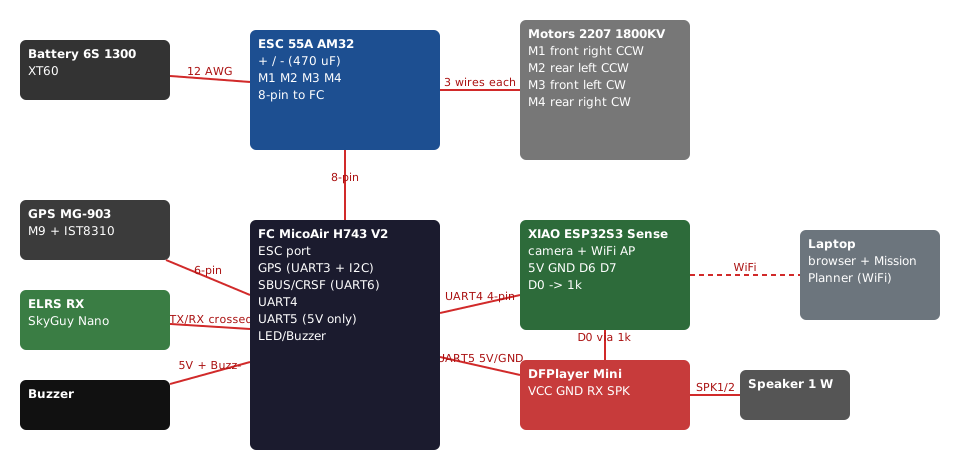
| FC plug (JST-SH) | Goes to | ArduPilot |
|---|---|---|
| GPS · GND 5V TX3 RX3 SCL SDA | MG-903 GPS + compass | SERIAL3 GPS |
| UART4 · GND 5V TX4 RX4 | XIAO: TX4→D7, RX4→D6 | SERIAL4 MAVLink2 115200 |
| UART5 · GND 5V | voice player power only | none |
| SBUS/CRSF · GND 5V TX6 RX6 | ELRS receiver, TX/RX crossed | SERIAL6 RC in |
| LED/Buzzer · 5V Buzz− | buzzer | built in |
| ESC 8-pin | 55A AM32 ESC | motors 1-4, current, ESC telemetry |
Software
Flight controller
- Flash ArduCopter 4.7.1 for
MicoAir743v2(hold BOOT, plug USB). - Mission Planner › Initial Tune Parameters: prop 5.1 in, 6S.
- Load
ardupilot/sos.param, write, reboot. All 66 values checked against the official 4.7.1 list. It caps the takeoff throttle: the default made the simulator climb to 30 m instead of 15. - Calibrate accelerometer, the GPS compass (untick the internal one), radio. Motor test, swap two wires on any motor that spins backwards.
- TX16S: ELRS, AETR, ch5 three-position LOITER / AUTO / RTL, ch7 motor emergency stop, ch8 arm.
Head unit
Arduino, board XIAO_ESP32S3 with OPI PSRAM, upload firmware/sos_cam. It makes the WiFi SOS-DRONE. The laptop opens http://192.168.4.1/ for the camera, position with a Google Maps link, height, distance, battery and voice buttons. Mission Planner connects on UDP 14550. Share the dashboard tab in the video call with 112, internet through the phone over USB.
Voice: record the instructions in Lithuanian on a phone, save as 0001.mp3 on the microSD. It plays on repeat for 3 minutes once the drone lands away from where it took off.
Flying
- Props off: motor test, radio-off failsafe, emergency stop.
- LOITER hover at 2 m, then Auto Tune in AltHold on a calm day.
- 50 m AUTO mission empty, then with 100 g of sand.
- Range check: drone on a stand 250 m away with video streaming, radio link quality above 80%. This proves WiFi and ELRS get along on 2.4 GHz.
- 200 m with the real kit.
make_mission.py BASE_LAT BASE_LON CASUALTY_LAT CASUALTY_LON writes the mission: climb to 15 m, hover 20 s 25 m short of the casualty so 112 sees the scene, land 5 m short facing them. Wait about 30 s after the GPS fix, then arm in AUTO with the throttle down. It does not fly back: it only has to buy time until the ambulance arrives, and the crew unplugs it and drives it back.sitl/video.py.film/film.py and film/sound.py.Verification
| Check | Result | |
|---|---|---|
| Collisions, 42 parts pairwise | none | pass |
| Spinning props to anything | 3.6 mm closest, tips 15.5 mm apart | pass |
| Door and kit | door swings 150° free, kit slides straight out | pass |
| Camera view | nothing of the drone in frame. Casualty visible hovering 25 m out at 15 m, and landed 5 m away. Out of frame for ≈8 s mid-descent | pass |
| GPS sky view, compass distances | 0% blocked above 10°, 53-113 mm from noise sources | pass |
| Centre of gravity | 0.8 mm off loaded, 1.3 mm empty | pass |
| Tip-over on the skids | 40° sideways, 44° fore-aft, props 94 mm off the ground | pass |
| Thrust, power, endurance | T/W ≈7, 7.4 min hover, mission 16% of the pack one way | estimate |
| 5 V rail, plugs, serial ports | 0.95 of 3 A, one job per port | pass |
| Screws | 4+ mm of thread everywhere, stack screws clear the top plate | pass |
| Printability | 4 watertight parts on one X1C plate, no supports | pass |
| ArduPilot parameters | 66 of 66 valid in 4.7.1 | pass |
| Head unit firmware | compiles for XIAO ESP32S3, parser and voice-player frames tested with real MAVLink | pass |
| Mission in ArduPilot SITL 4.7.1 | armed in AUTO, cruise 15.1 m, 26 s overview, landed 8.0 m from the casualty facing them (1° off). Voice code replayed on the telemetry fired once, after the landing | pass |
| Budget | €288.85 of €300 | pass |
Measure first
The frame and a few parts are modelled from shop data. When they arrive, measure these, set them at the top of sos.scad and run ./make.sh. If every check still passes, print.
- motor-to-motor distances (shop: 145 × 172 mm)
- where the 4 standoffs sit and how tall they are (25 mm assumed)
- bottom and top plate size
- the folded CAT with gloves and card (165 × 61 × 44 mm assumed)
- the battery's real weight
Limits
- No thrust table is published for these motors, so power and flight time are estimates. The first flights learn the real hover throttle.
- WiFi video and ELRS share 2.4 GHz. The antennas sit 120 mm apart and the camera sends at 15 dBm. The range check decides.
- The phone-class camera is fine in daylight, weak at dusk, blind at night.
- Land on ground flatter than about 15°.
- 802 g and privately built: operator registration, A1/A3 certificate, A3 subcategory (away from people, 150 m from houses), below 120 m, in sight. Under 16 flies only under direct supervision. A real service near people needs the Specific category. Check with the TKA.
- Not medical advice. Have a first aid instructor check the kit, the card and the voice script.